

Your Car Might Be A Witness: What Your Vehicle’s “Black Box” Reveals After A Crash
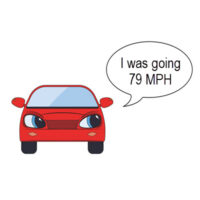
If two drivers each swear the light was green, who is right? Increasingly, the answer isn’t found in either driver’s memory. It’s tucked inside a small computer module wired into the car itself. Most vehicles built in the last two decades carry an event data recorder, often nicknamed a “black box,” that quietly logs a handful of seconds surrounding a collision. For anyone piecing together what happened on the road, that data can matter as much as any eyewitness. Baltimore car accident attorneys increasingly look to this kind of evidence to help reconstruct disputed crashes.
What Does a Black Box Actually Record?
Despite the dramatic name, an event data recorder isn’t tracking your daily commute or listening to your conversations. It typically captures a short window, often under a minute, centered on a sudden change in speed. Within that window, it may log vehicle speed, throttle position, brake application, seatbelt use, and steering input.
Curious what your own dashboard might already be quietly storing? A few common data points include:
- Speed in the seconds before impact
- Whether and when brakes were applied
- Seatbelt status for front seat occupants
- Steering angle changes
- Airbag deployment timing
None of this tells the full story on its own, but paired with photos, road conditions, and witness accounts, it can help clarify what a driver actually did in the moments that mattered.
Who Actually Owns This Information?
Here’s a question that trips people up: if the data lives inside your car, is it automatically fair game for insurance companies or opposing attorneys to pull? Not exactly. Federal law treats this data as the property of the vehicle’s owner or lessee, not the manufacturer, the dealership, or the other driver’s insurer. Access generally requires the owner’s consent, a court order, or another recognized legal basis.
That protection matters because black box data can cut both ways. It might confirm that a driver braked appropriately, or it might raise uncomfortable questions about speed. Understanding who controls access, and how quickly that data can be lost when a damaged vehicle is repaired or scrapped, is often an early and pressing concern after a serious wreck.
Why Timing Can Work Against You
Unlike a police report, event data recorder information doesn’t sit in a government file waiting to be requested months later. It can be overwritten by subsequent trips, erased during vehicle repairs, or lost entirely once a totaled car is sent to a salvage yard. Once that module is gone, so is the objective record of what the car was actually doing.
Have you ever wondered why some accident investigations move so quickly to secure a vehicle? Preserving this kind of evidence before it disappears is often part of the reason.
Were you recently involved in a crash where fault is being disputed? The attorneys at Iamele & Iamele, LLP work to identify and preserve evidence, including event data recorder information, before it can be altered or lost. Contact our firm today to schedule a free, confidential consultation and talk through what happened.
Source:
law.cornell.edu/uscode/text/49/30129